

Your home’s security starts at the front door.
The locks you choose are the first line of defense against unwanted entry. For homeowners, knowing when to change locks is key to maintaining a secure property. (Pun intended.)
Several factors can influence this decision, from recent security events to the age and type of your existing hardware.
In this guide, we’ll cover the situations that call for immediate replacement, the benefits of upgrading your hardware, and how the local environment in Orange County can affect your security choices.
When to Change Your Locks
There isn’t a timeline that fits every home. Instead, certain circumstances should prompt you to replace your locks immediately.
When You Move into a New Home
You have no way of knowing who has a copy of the key from the previous owners. Real estate agents, contractors, neighbors, or even distant relatives could have duplicates. Changing the locks ensures you’re the only one with access to your new home.
After Losing Your Keys
Treat this as a security breach.
Rekeying (changing the internal pins of the lock) is a fast option, but replacing the lock entirely is often a better long-term approach, especially if the lock is old.
After a Break-In or Attempted Burglary
The old lock is compromised, either due to damage from forced entry or because intruders may have obtained a key. Even an attempted break-in can damage the lock’s internal mechanism, making it less reliable.
When a Roommate or Tenant Moves Out
If you rent a room or a property, you should change the locks whenever a tenant moves out. It ensures the security of your property and your future tenants.
Following a Separation or Divorce
Be sure your home remains your private space. This helps establish clear boundaries and prevents unauthorized entry.
When You’ve Given Out Too Many Keys
Over the years, you might give spare keys to house-sitters, contractors, or cleaning services. If you lose track of who has a key, it’s time for a reset. Changing the locks gives you a clean slate and complete control over access to your property.
Understanding Lock Lifespans & Wear
Like any mechanical device, locks have a limited lifespan. Constant use, exposure to the elements, and internal wear can cause failure over time.
- Standard Builder-Grade Locks: The basic locks installed in many new homes may last 5-7 years before showing signs of wear, such as sticking, difficulty turning the key, or a wobbly handle.
- Mid-Range Locks: Better quality locks from reputable brands can last 10-15 years or more with proper care.
- High-Security Locks: These are built with superior materials and complex mechanisms designed to resist picking, drilling, and bumping. They can last for decades, making them a worthwhile investment.
Signs that your lock is aging and may need replacement include:
- Rust or tarnish on the lock body
- The key is sticking or difficult to insert or turn
- The latch is failing to engage properly
- The lock feels loose or wobbly in the door
The Security Landscape in Orange County
Burglary rings sometimes target suburban neighborhoods, looking for homes with obvious security weaknesses. An old, worn-out lock says. “Hey, come in!”
Vigilance starts with strong physical barriers, and your locks are the most important part of that system.
The Value of High-Security Locks
High-security locks provide a significant upgrade over standard hardware.
- Resistance to Forced Entry: High-security locks are made from hardened steel and other durable materials that resist drilling, sawing, and brute-force attacks.
- Protection Against Lock Picking and Bumping: They feature complex pin systems and unique keyways that make them extremely difficult for burglars to manipulate. “Key bumping” is a technique in which a specially cut key is used to force the pins into alignment, and standard locks are highly vulnerable to it.
- Key Control: Many high-security lock systems come with restricted keys. This means that keys can only be duplicated by an authorized locksmith with proof of ownership. You no longer have to worry about unauthorized copies from a hardware store.
While the upfront cost is higher, the peace of mind and superior protection of high-security locks make them a sound investment in your family’s safety and your property’s security.
Rekeying vs. Replacing: What’s the Difference?
When you need to change your locks, you can choose to rekey or replace them.
- Rekeying: A locksmith alters the pinning inside the existing lock cylinder so that it works with a new key. The old key will no longer function. This is a cost-effective solution if your current locks are in good condition.
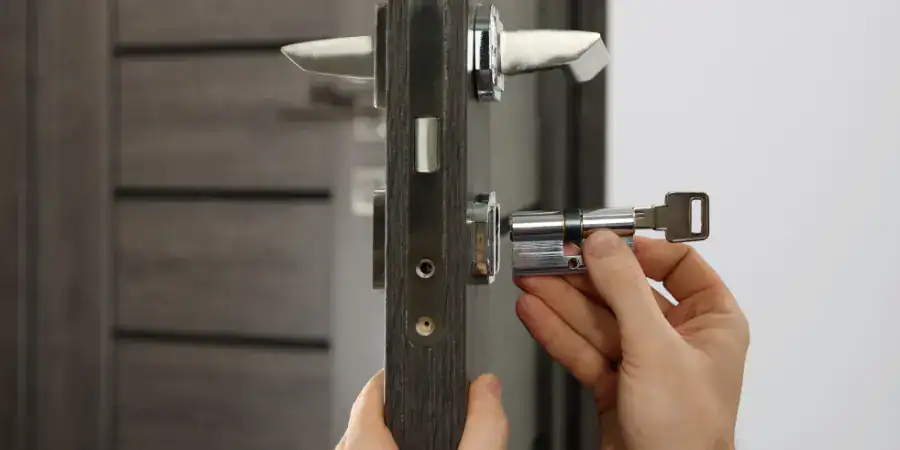
- Replacing: This involves removing the entire lock mechanism (both the interior and exterior components) and installing a new one. A replacement is necessary if your lock is old or damaged, or if you want to upgrade to a higher-security model.
Generally, you should opt for a full replacement if your locks are more than 10 years old, show visible signs of wear, or are a basic, low-security model.
FAQs About Changing Locks
How much does it cost to change locks in Orange County?
The cost varies based on whether you rekey or replace the locks and the quality of the new hardware. Rekeying is less expensive than a complete replacement. High-security locks will have a higher upfront cost for both the hardware and installation.
Can I install new locks myself?
If you have experience with home improvement projects, you may be able to install a standard deadbolt. However, for high-security locks or complex installations, hire a professional locksmith to ensure the lock is installed correctly.
What is a “bump-proof” lock?
A bump-proof lock is designed to resist key bumping, a lock-picking technique that uses a specially crafted key to open standard pin-tumbler locks. High-security locks often incorporate patented technology to prevent this type of manipulation.
Should I get a smart lock?
Smart locks offer convenience features like keyless entry, remote access, and activity logs. Look for models with strong physical security features (like a high-quality deadbolt) in addition to their smart capabilities. Ensure the lock has a good security rating against both physical and digital attacks.
How often should I rekey my rental property?
As a landlord, you should rekey the locks every time a tenant moves out. This is a standard security practice that protects you, your property, and your new tenants.
Do I need to change the locks on my garage door?
Yes, the garage is a common entry point for burglars. If your garage provides access to your home, its lock is just as important as your front door lock. Ensure it’s secure and consider changing it when you change the other locks on your property.
Is rekeying as secure as replacing a lock?
If the lock itself is high-quality and in good working condition, rekeying is a very secure option. It effectively creates a “new” level of access. However, rekeying doesn’t improve the lock’s physical strength or resistance to forced entry.
What should I look for when choosing a new lock?
Look for locks with an ANSI/BHMA Grade 1 rating, which is the highest residential security standard. Features to consider include hardened steel bolts, anti-drill plates, and resistance to picking and bumping.