

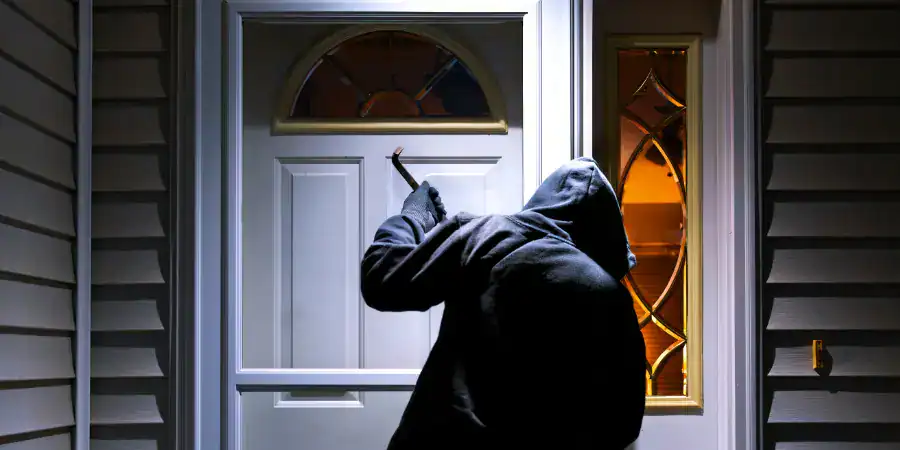
Home security often focuses on cameras and alarm systems. While these measures promote deterrence, they don’t prevent entry. The primary barrier between your family and an intruder remains the mechanical locks on your doors.
Most builder-grade locks installed in residential developments — even in high-end Orange County neighborhoods — offer minimal resistance to forced entry or manipulation. Upgrading to high-security hardware is one of the most effective, one-time investments you can make for home safety.
Why Standard “Big Box” Locks Fail
The deadbolt you purchased from the bargain bin at a local hardware store is likely an ANSI Grade 3 lock. These provide the minimum security for residential use, and fail for several reasons:
- Susceptibility to Bumping: Lock bumping is a technique where a specially cut key is inserted and struck, forcing the pins to jump and the lock to open. Standard pin-tumbler locks are highly vulnerable to bumping.
- Weak Strike Plates: The metal plate attached to the door frame is often secured with short screws that only bite into the soft wood trim, not the structural stud. A solid kick can split the frame and open the door.
- Drilling Vulnerability: Standard cylinders lack hardened steel inserts. A power drill can destroy the shear line in minutes, allowing the bolt to retract.
- Unauthorized Key Duplication: Standard keys can be copied at any kiosk or hardware store without your knowledge.
Features of True High-Security Hardware
When shopping for high-security locks, look for mechanical features that prevent bypass methods.
1. ANSI Grade 1 Certification
The American National Standards Institute (ANSI) grades locks on durability and strength.
- Grade 1: Commercial grade. The highest level of security.
- Grade 2: Mid-tier residential.
- Grade 3: Basic residential.
For high security, accept nothing less than Grade 1.
2. Drill Resistance
Look for cylinders that incorporate hardened steel ball bearings or hardened steel inserts. These deflect drill bits, preventing them from penetrating the pin chambers.
3. Pick and Bump Resistance
High-security locks have complex internal mechanisms beyond standard pins:
- Sidebars: A secondary locking bar that must engage for the cylinder to turn.
- Telescoping Pins: Pins inside other pins.
- Rotating Discs: Angled discs that must align perfectly (similar to a safe dial).
4. Key Control (Restricted Keyways)
A restricted keyway means the key blanks are patent-protected. You must go to an authorized locksmith, and often present ID or a security card, to get duplicates. This prevents dog walkers, contractors, or house sitters from making unauthorized copies.
Top Recommendations for Homes
Based on mechanical durability, pick resistance, and physical strength, these are the top contenders for residential high security.
Medeco Maxum (M3 or X4)
Medeco is arguably the most recognized name in high security. The Maxum deadbolt is a fortress.
- Mechanism: Uses rotating pins that must be elevated and rotated to specific angles to allow a sidebar to drop.
- Strength: The bolt is made of hardened steel and is practically impossible to saw through.
- Key Control: Extremely strict. Duplication requires a security card.
- Best For: Front doors that need maximum physical strength and pick resistance.
Mul-T-Lock Hercular
Mul-T-Lock is famous for its “pin-within-a-pin” technology.
- Mechanism: Telescoping pins create a huge number of combination possibilities, making picking exceptionally difficult.
- Visual Deterrent: These cylinders look distinct and robust, often signaling to thieves that the home is not an easy target.
- Durability: Built to withstand harsh weather and heavy use.
- Best For: Homeowners who want a visible deterrent and heavy-duty hardware.
Abloy Protec2
Abloy uses a disc-detainer system rather than springs and pins. This is widely considered one of the most secure mechanisms in the world.
- Mechanism: Rotating discs align to form a channel for the sidebar. There are no springs to wear out or get fouled by dirt.
- Pick Resistance: Considered virtually pick-proof by most locksmiths.
- Drill Resistance: The face of the lock is hardened steel.
- Best For: harsh environments (coastal OC homes with salt air) and those demanding the highest level of manipulation resistance.
Schlage B60N (The Budget “High-ish” Security Option)
If a $300 deadbolt isn’t in the budget, the Schlage B60N is the best Grade 1 lock available at big-box prices (under $50).
- Pros: It has an anti-pick shield, hardened steel reinforcement, and is Grade 1 rated.
- Cons: It lacks restricted keys and the complex internal geometry of Medeco or Abloy.
- Best For: Side doors, garage pedestrian doors, or budget-conscious upgrades.
Smart Locks vs. Mechanical Security
Many homeowners want the convenience of smart locks, but adding technology can introduce new vulnerabilities. Prioritize the physical hardware.
The Hybrid Approach
Use a high-security mechanical deadbolt (like Medeco) on your primary entry, and a high-quality smart lock on the garage entry or side door for convenience.
The Schlage Encode Plus
If you must go fully digital on the front door, the Schlage Encode Plus is a solid choice.
- Security: ANSI Grade 1 mechanical rating.
- Tech: Works with Apple HomeKey (tap to unlock).
- Connectivity: Connects directly to Wi-Fi without a bridge.
Avoid unbranded smart locks. These often have plastic internal gears and Grade 3 (or lower) latches that can be easily kicked in.
DIY Installation vs. Professional Locksmith
Installing a deadbolt is a manageable project for most DIY enthusiasts, but high-security locks require precision.
When to DIY
- Standard Replacement: If you’re swapping an existing deadbolt and the door is properly aligned.
- Tools Needed: Phillips screwdriver, tape measure. (Note: Medeco and Mul-T-Lock often use metric hex screws or specific retention screws, so check the box.)
When to Call a Pro
- Misaligned Doors: If you have to push or pull the door hard to get your current lock to latch, don’t install a high-security lock without fixing the alignment. These locks have tight tolerances; misalignment will cause the key to snap or the lock to jam.
- Mortise Locks: If your door has a large rectangular box inset into the edge (common in older custom Orange County homes), this is a mortise lock. It requires specialized knowledge to retrofit with high-security cylinders.
- Fresh Installation: Drilling a new hole into a solid core door requires a jig and hole saw kit to ensure perfect perpendicular alignment.
Strengthening the Door Frame
A lock is only as strong as the wood it bolts into. If you install a Medeco Maxum but keep the standard strike plate with 1/2 inch screws, a kick will still open the door.
- Upgrade the Screws: Replace the short screws in your strike plate with 3-inch hardened steel screws. These reach through the door jamb and into the 2×4 stud of the house frame.
- Door Armor: Consider installing a strike reinforcement plate (like Door Armor or StrikeMaster). These are long metal plates that spread the force of a kick across a larger area of the door frame.
Next Steps
Don’t wait for a neighborhood alert to upgrade your security.
- Look at your deadbolt. If it has no brand or is a basic Kwikset/Defiant model, it is likely Grade 3.
- Remove one screw. If it is less than 3 inches long, replace it immediately with a 3-inch screw.
- Select a Grade 1 deadbolt from the list above.
- Swap out the hardware or contact a local, licensed locksmith in Orange County to handle the installation and keying.
FAQs: High-Security Locks
Q: Are high-security locks really worth the extra cost?
Yes. The price difference covers precision engineering, hardened materials, and patent protection. A standard lock costs $30 but can be bypassed in seconds. A high-security lock costs $150+ but provides a genuine barrier against physical attacks and picking.
Q: Can I rekey a high-security lock myself?
Generally, no. High-security cylinders like Mul-T-Lock or Medeco require specific pinning kits, proprietary depths/spacings, and sometimes specialized tools. You’ll have to take the lock to an authorized dealer for rekeying.
Q: What if I lose my keys to a restricted lock?
This is the downside of high security. You can’t go to a hardware store. You must visit the authorized locksmith who sold you the system (or one with the same dealer authorization) and present your security ID card. If you lose the card and all keys, you may have to replace the cylinder.
Q: Do smart locks offer the same security as Medeco or Abloy?
Mostly no. Smart locks prioritize convenience. While some are Grade 1 rated (like the Schlage Encode), they typically use standard pin-tumbler key overrides, which can be picked or bumped. Mechanical high-security locks prioritize resistance to entry above all else.
Q: Can high-security locks be bumped?
True high-security locks (Medeco, Abloy, Mul-T-Lock) are virtually bump-proof. Their mechanisms involve sidebars or rotating discs that can’t be manipulated by the kinetic energy transfer used in bumping.
Q: Will these locks fit my existing door?
Most likely. High-security deadbolts are designed to fit standard door preparations:
- Backset: 2-3/8″ or 2-3/4″
- Bore Hole: 2-1/8″
- Door Thickness: 1-3/4″ (Standard exterior door)
Always measure before buying.
Q: Which brand is the absolute best?
“Best” is subjective, but Abloy Protec2 is widely regarded by the locksmith community as having the highest pick resistance and durability in harsh climates. Medeco is often considered the standard for physical strength and drill resistance.
Q: How long do high-security locks last?
With proper maintenance (using only dry lubricant like graphite or PTFE, never WD-40), a commercial-grade high-security lock can last 20 to 30 years or more. They’re built with tighter tolerances and better metals than standard residential locks.