

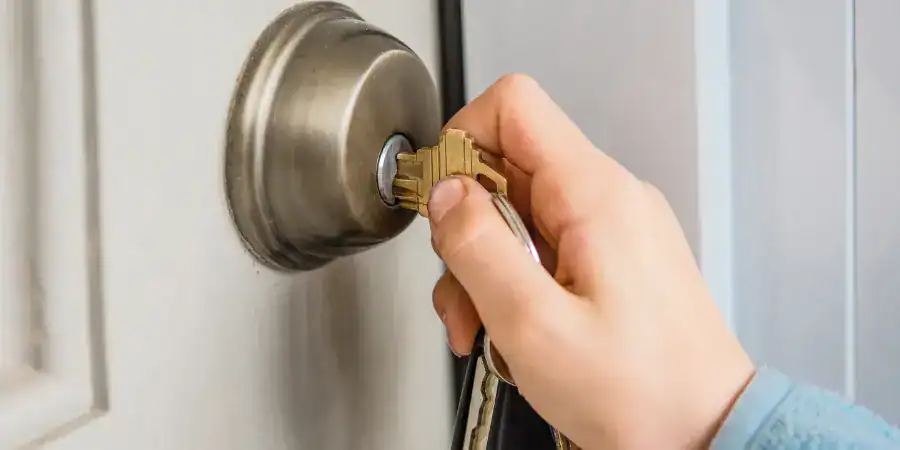
Your locks work 24/7 — rain or shine, key after key — until they don’t.
From sturdy exterior deadbolts to sleek smart locks, every piece of hardware has a ticking clock. Usage, weather, and build quality chip away at their lifespan. Tick, tock, tick, tock, just like the crocodile in Peter Pan.
So what are the warning signs of a failing lock, and when is it time to repair, replace, or upgrade before your security becomes Captain Hook-level precarious?
Quick Facts: Average Lock Lifespan
- Standard deadbolts: 7–10 years (up to 15 years for high-grade)
- Knob & lever locks: 5–7 years
- Smart locks/electronic keypads:
- Mechanical: up to 10 years
- Electronic components: 5–7 years
- Battery change: every 6–12 months
- Padlocks:
- Heavy-duty/outdoor: 5–10 years
- Cheap brass (outdoor): 2–3 years
The Lifespan of Locks by Type
Standard Deadbolts
- Last 7–10 years (15 if solid brass or steel)
Fail when:
- Internal pins/springs weaken
- You notice more play or resistance
Knob & Lever Locks
- Typically installed on interior or older exterior doors
- Expected to last 5–7 years.
Signs of failure:
- Sticky or faulty latch
- Repeated need to “jiggle” the knob
Smart Locks & Electronic Keypads
- Mechanical parts: up to a decade
- Electronics (chips, screens, wiring): 5–7 years
Watch for:
- Unusual beeping
- Dead screens
- Quick battery drain
Padlocks
- Heavy-duty/outdoor: 5–10 years
- Cheap brass: 2–3 years if exposed
Warning signs:
- Visible rust
- Stiff shackle
- Key sticking or not turning
What Destroys Locks? Top Factors
Harsh Weather
- Rain, humidity, and salt air = rust/corrosion
- Freezing/heat = warping and stiff parts
Heavy Use
- Busy homes: locks get worn out due to daily use
Poor Installation
- Misaligned strike plates = forced keys = parts wearing out fast
No Maintenance
- Never lubricating locks leads to grinding and stuck mechanisms
Pro tip: Add a squirt of graphite powder or dry Teflon spray once a year.
Signs Your Lock Needs Replacing
- The key turns with resistance, or only if you wiggle the handle
- Grinding or sticking mechanism, even after lubrication
- Visible deep rust, especially on the lock cylinder/strike plate
- Any sign of a break-in or attempted forced entry
- Lost or stolen keys (especially if the lock is old)
Should You Rekey or Replace?
Rekeying
- Change internal pins so old keys don’t work
- Cost-effective if the lock is in good shape, but you want new keys (e.g., lost keys, just moved in)
Replacement
Needed if:
- The lock is rusty, grinding, or worn out
- Structural integrity has been compromised (e.g., after a break-in)
- Existing hardware is 7+ years old
Advantages:
- Modern security features (anti-pick, reinforced strike plates)
- Peace of mind for your home
Checklist: How to Test Your Locks
Walk through your home and test every exterior lock:
- Insert the key. Does it turn smoothly?
- Does the deadbolt extend fully and retract easily?
- Any resistance, sticking, or grinding?
- Check metal surfaces for rust, corrosion, or serious discoloration
If anything seems off, replace that lock
A lock upgrade is a straightforward DIY task that immediately strengthens your home’s security.
FAQs: How Long Does a Lock Last?
Can I fix a sticky lock without replacing it?
Use dry graphite powder in the keyhole. Avoid oil-based sprays. If it still sticks, replace the lock.
How often should I change my front door lock?
Change standard locks every 7–10 years, or immediately after moving, losing keys, or a break-in attempt.
Does the weather affect how long a lock lasts?
Yes. Moisture causes rust. Extreme temperatures warp metal and cause misalignment.
Are smart locks as durable as traditional deadbolts?
Mechanical parts are durable. Electronics usually last 5–7 years, so expect earlier failures.
Is it cheaper to rekey a lock or replace it?
Rekeying is cheaper if the lock is in good shape. Replacing is better if the lock is old, damaged, or outdated.
What is the best material for an exterior lock?
Choose solid brass, bronze, or steel for durability and security.
Can a locksmith repair a broken internal mechanism?
A locksmith can repair some locks, but replacement is often a better value.
Why does my key turn, but the deadbolt doesn’t move?
The tailpiece (which links the cylinder to the latch) has likely snapped. Replace the lock to secure your door.