

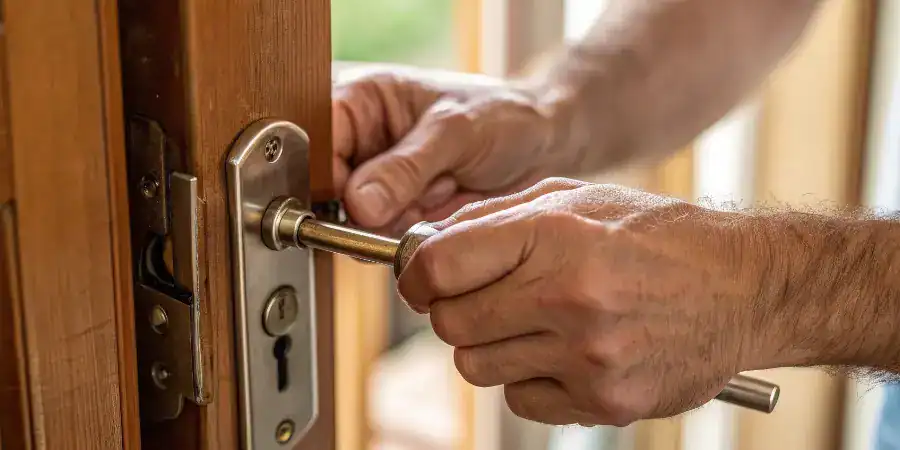
Your home’s security starts with the lock on your door. Lost keys? Just moved in? Before you replace the entire lock, consider a faster, more affordable option: rekeying.
Rekeying changes the lock so old keys no longer work — without replacing the hardware. In this guide, you’ll learn when to rekey, why it often beats full replacement, and how the process works.
When Should You Rekey Your Locks?
Certain scenarios make your home vulnerable, and rekeying resolves the problem quickly. These include:
Moving Into a New Home
When you move into a new home, old keys may be in the hands of many people. Rekey your exterior door locks as soon as you move in so only trusted people can enter.
Losing Your Keys
Losing house keys is a security risk. You never know who might find them, especially if they have your address. Rekeying ensures the lost keys can’t access your home.
After a Break-In or Attempted Burglary
After a break-in, rekey your locks to restore security. Even if the entry wasn’t forced, rekey to be safe. If the lock is too damaged, replace it; if not, rekeying is wise.
When a Roommate or Tenant Moves Out
When a tenant or roommate moves out, you can’t be sure that all keys will be returned. Rekeying ensures former residents lose access.
After a Change in Your Relationship Status
After a separation or divorce, even if keys are returned, you can’t be sure about copies. Rekeying gives you control over your home’s security.
After Giving a Spare Key to a Contractor or Service Person
If you’ve given a key to a contractor or service person, rekey once you no longer need them to have access. This removes risks from spare keys.
Why Rekey Instead of Replace?
While replacing locks might seem like the more thorough option, rekeying offers several distinct advantages.
Cost-Effectiveness
Rekeying is usually cheaper than replacing locks. You pay only for labor and small components, not new hardware. If your locks are high-quality and in good shape, rekey to keep your hardware and save money.
Convenience
Rekeying is faster than lock replacement. A locksmith can rekey several locks in under an hour, and you keep your current hardware. You can also key all locks alike for convenience.
Environmental Friendliness
Rekeying reuses your lock hardware to cut waste, making it a greener choice. There’s no need to discard working locks.
How to Rekey a Lock: A Step-by-Step Guide
The process of rekeying a lock involves rearranging the pins inside the lock cylinder to match a new key. While calling a professional locksmith is the easiest and most reliable option, you can do it yourself with the right tools and a little patience.
Note: This guide is for a standard pin-tumbler lock. The process may vary depending on the lock type.
Step 1: Gather Your Tools
You’ll need a rekeying kit for your specific lock brand (e.g., Schlage or Kwikset). These kits usually include:
- A new key
- New pins (in varying sizes)
- A key gauge to measure the old and new keys
- A “follower” tool or cylinder removal tool
- Tweezers
Step 2: Remove the Lock Cylinder
Remove the lock cylinder from the door by unscrewing it. Use the brand’s included tools to remove the cylinder from the housing.
Step 3: Remove the Cylinder Plug
Insert the old key, turn it slightly, and push out the cylinder plug with the follower tool. Keep the tool steady so pins and springs don’t fall out.
Step 4: Remove the Old Pins
Remove the plug, dump out old pins, and keep them separate from new pins to avoid mix-ups.
Step 5: Insert the New Pins
Insert the new key in the empty plug, then add the new pins with tweezers according to the kit instructions. Each pin’s top should be flush with the plug surface.
Step 6: Reassemble the Lock
With new pins in place, reinsert the plug into the cylinder using the new key. Turn it back to the vertical position and remove the key.
Step 7: Test the Lock
Before putting the lock back, test it. The new key should turn; the old one should not. If all works, reinstall the lock.
FAQs About Rekeying Locks
How long does it take to rekey a lock?
A locksmith takes 10–15 minutes to rekey a lock. DIY may take 30–45 minutes for beginners.
Can all locks be rekeyed?
Most standard pin-tumbler locks can be rekeyed, but some high-security or older models may require special tools. If there’s a kit for your lock, it’s likely rekeyable.
Is rekeying as secure as replacing a lock?
Rekeying is as secure as replacement, if the lock is in good shape. It only changes internal pins, not strength.
Can I rekey my locks to use one key for all of them?
Yes, if your locks are the same brand or compatible, they can be keyed alike. This is called “keying alike.”
What is the difference between a master key and rekeying?
Rekeying makes a lock work with a new key. A master key system lets individual keys work on specific locks and a master key open all.
Should I hire a locksmith or do it myself?
A locksmith is safest and fastest. DIY is cheaper but risks damaging your lock if done wrong.
How much does it cost to rekey locks?
Costs vary, but rekeying usually includes a service fee and per-lock charge—less than replacing all hardware.
When should I replace my locks instead of rekeying?
Replace locks if they’re worn, damaged, or if you want an upgrade or style change.