

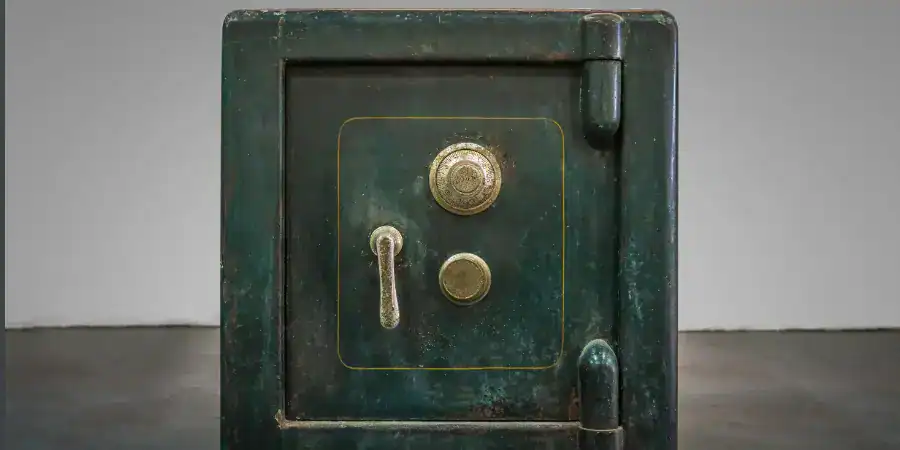
You bought a safe to protect valuables: family heirlooms, cash, firearms, or important documents. You depend on that steel box against theft, fire, and flood. But like all household hardware, safes are mechanical devices that wear out and can eventually fail.
A compromised safe creates a false sense of security. While you may think your items are protected, the locking mechanism might be unreliable, or the fire seal may be dried out. Noticing early warning signs of failure is crucial to maintaining genuine security.
This guide outlines the physical and mechanical indicators that your safe is no longer doing its job.
1. Physical Deterioration & Rust
Steel is tough, but it isn’t impregnable. Environmental factors play a significant role in the longevity of your safe, especially if you live in a humid area or store it in a garage or basement.
Exterior Rust & Corrosion
Rust is an obvious degradation sign. Even surface rust may indicate deeper issues.
- Hinge Integrity: Hinges are the pivots that allow the safe door to open and close. If rust forms around these pivots, it weakens them. Burglars don’t need to crack the code if they can simply pry the door off weakened hinges.
- Door Jambs: The door jamb is the frame that the safe door presses against when shut. Corrosion here can prevent the door from sealing tightly. This gap compromises pry resistance and fire protection.
- Bottom Rot: Safes sitting directly on concrete floors often soak up moisture over time. Check under your safe: if the metal is flaking or soft, the structural strength is already gone.
Warping & Dents
Physical trauma — whether from a move, drop, or attempted break-in — can warp the safe’s door or body.
- Misalignment: If the door scrapes against the frame when closing, the body is likely warped. This misalignment puts stress on the locking bolts. Eventually, the bolts may jam in the extended position, locking you out permanently, or fail to engage fully, leaving the safe unlocked.
- Visible Dents: A significant dent near the locking mechanism can press against internal components, causing friction that leads to failure.
2. Lock Mechanism Failures
The lock is the safe’s core. If problems start, they worsen until a complete failure.
Mechanical Dial Issues
Traditional combination locks are reliable but depend on precise internal tumblers — wheels that align for the lock to open.
- Drifting Combination: If you find yourself having to dial the numbers slightly off the mark (e.g., dialing 21 instead of 20) to get it to open, the wheels inside are slipping. This “drifting” is a precursor to a total lockout.
- Stiff Dialing: The dial should spin freely. Grinding noises or variable resistance while turning indicates internal debris or insufficient lubrication. Don’t spray standard WD-40 into the dial; it attracts dust and gums up the works.
- Inconsistent Opening: If a correct combination only opens the safe sporadically, the mechanism is worn.
Electronic Keypad Malfunctions
Digital locks offer convenience but introduce electronic points of failure.
- Battery Drain: If your safe uses up high-quality 9V batteries in a few weeks, there may be a short circuit—an unintended electrical connection—in the circuit board or a failing solenoid, which is an electronic locking component. This often causes electronic failure, where the keypad stops responding.
- Button Wear: On cheaper keypads, the membrane under frequently used buttons wears out. If you have to press the number “4” extra hard to get it to register, the keypad is reaching the end of its life.
- Beep Codes: Most electronic locks emit specific beep patterns to warn of low batteries or penalties. If your lock beeps randomly or gives error codes even with fresh batteries, the logic board is failing.
3. Compromised Fire Protection
Fire ratings are not permanent. The materials used to insulate safes break down over time, specifically the seals that expand to block out heat and smoke.
Dried Out Seals
Fire safes use an intumescent seal (a material that expands when heated) around the door. In a fire, this seal expands to weld the door shut and block heat.
- Brittleness: Open your safe and inspect the seal. If it is cracked, peeling, or brittle to the touch, it will not expand correctly during a fire.
- Gaps: If pieces of the seal are missing, heat will penetrate the safe almost immediately, incinerating paper documents long before the rated time is up.
Moisture in the Insulation
Many older fire safes use wet-fill insulation — a concrete-like mix with high water content between safe walls for fire resistance. Over decades, this moisture may evaporate, lowering fire resistance, or move inside, causing mold.
- Internal Rust: If you see rust on the safe’s interior or on your firearms/documents, the insulation may be releasing moisture. This damages the contents that the safe should protect.
4. Obsolescence & Security Standards
Security is ever-evolving. Criminals’ tools and techniques advance, so older safes may not withstand modern attacks.
Single-Walled Construction
Many older “strongboxes” are just single layers of metal.
- The Drill Test: Modern cordless drills equipped with carbide bits (extra-hard cutting tips) can penetrate mild steel in seconds. If your safe is merely a thin metal cabinet without hard plate protection—hardened steel designed to shatter drill bits—it offers minimal protection against a determined thief.
- Lightweight Design: If you can easily wobble the safe or slide it by yourself, it’s too light. Thieves won’t bother cracking it; they’ll just carry it out and open it elsewhere.
Outdated Bypass Vulnerabilities
Certain older electronic safes have well-known bypasses that are now common knowledge on the internet.
- Solenoid Bumping: Some older, less expensive electronic safes can be opened by physically bouncing the safe while turning the handle. This method uses gravity to disengage the solenoid—the electronic lock part that moves the bolt—allowing the safe to open.
- Override Key Weakness: If your safe relies on a tubular lock (circle key) for emergency access, be aware that tools to pick these locks are cheap and widely available.
5. Evidence of Tampering
Sometimes the sign that your safe is insecure is that someone has already tried to get into it. Even a failed attempt can compromise the unit’s security.
Handle Play
There should be a small amount of “play” in a safe handle, but it shouldn’t spin freely or feel disconnected.
- Forced Rotation: If the handle sits at an odd angle or feels loose, someone may have tried to force the bolts by torquing the handle with a pipe or wrench. This can shear the internal pins connecting the handle to the bolt work.
Scratch Marks on Keyways
Inspect the keyhole or the area around the dial.
- Picking Attempts: Small scratches around the keyway indicate attempts to pick the lock. Even if unsuccessful, they may have damaged the pins inside, making your key work inconsistently.
- Drill Points: Look for small divots or scratches near the dial ring or keyhole. Burglars often mark drill points before being interrupted.
6. Anchor Failure
A secure safe must be immovable. The safe’s security is compromised if anchoring fails.
Loose Bolts
Check the bolts securing the safe to the concrete.
- Movement: Grab the safe and try to rock it. If it moves, the anchors have loosened. Over time, concrete anchors can loosen due to vibration or foundation settlement. A loose safe is a leverage point for a thief. They can rock the safe to pry it off the floor completely.
- Substrate Failure: If the concrete around the bolts is cracking or crumbling, the anchors have no holding power.
7. Moisture & Mold Issues
A safe that damages its contents is still a security failure. Assets are lost to nature rather than theft.
Smell Test
Open your safe. If you smell mildew or mustiness, the internal environment is compromised.
- Seal Failure: This usually means the door seal is allowing humid air from the room to enter.
- Desiccant Saturation: If you use silica packs and they are saturating in days rather than months, the safe is not airtight. This environment will rust guns, rot wood stocks, and fuse paper documents together.
When to Repair vs. Replace
Recognizing these signs is step one. Step two is deciding the course of action.
Repair if:
- The safe is a high-end commercial-grade unit (TL-15 or TL-30 rated).
- The issue is strictly electronic (e.g., swapping a keypad).
- The manufacturer offers a warranty for the specific defect.
Replace if:
- The safe is a generic “big box store” model. The cost of a locksmith opening and repairing it often exceeds the safe’s value.
- There is structural rust or heat damage.
- The fire rating has expired (older than 15-20 years).
- The locking mechanism parts are no longer available.
Periodic hardware audits are vital for a secure home. Don’t assume your ten-year-old safe still performs. Check seals, locks, and anchors. If warning signs appear, act before you’re locked out or robbed.
FAQs About Safe Security
How often should I service my safe?
For a standard home residential safe, you should have it serviced by a professional safe technician every 3 to 5 years. If the safe is in a high-traffic commercial environment, annual service is recommended to keep the locking mechanism lubricated and functioning correctly.
Can I use WD-40 to lubricate my safe lock?
No. You should never use standard WD-40 or similar solvent-based lubricants on a safe lock. These solvents eventually dry out and leave a sticky residue that attracts dust and dirt, which can gum up the tumblers and cause a permanent lockout. Use only lubricants designed explicitly for locks, or hire a professional.
How long do fireproof safes last?
The fire-resistant properties of a safe do not last forever. The moisture content in the insulation can evaporate over time, and door seals can dry out. Generally, a fire safe remains effective for about 10 to 15 years. If your safe is older than that, it may serve as a burglary deterrent but offer little protection against heat.
What should I do if my combination dial feels stiff?
A stiff dial is a warning sign of internal friction or debris. Stop using the safe immediately and, if possible, leave the door open. Contact a locksmith or the manufacturer. Continuing to force a stiff dial can result in a sheared component inside the lock, leaving the safe permanently locked.
Is a digital lock less secure than a mechanical dial?
In terms of burglary resistance, high-quality digital locks (UL Type 1) are just as secure as mechanical dials. They actually offer features that mechanical locks lack, like penalty lockouts for wrong guesses. However, cheap, unrated digital locks on budget safes are often much easier to bypass than traditional dials.
Why is there moisture inside my safe?
Safes are not usually airtight, and temperature fluctuations can cause condensation to form on the steel interior. Fire safes with wet-fill insulation also release moisture naturally. To prevent damage to contents, you should always use a dehumidifier rod or silica gel desiccant packs inside the safe.
Can a locksmith open my safe if the electronic lock fails?
Yes, a certified safe technician can open a safe with failed electronics. However, depending on the failure, this might require drilling holes in the safe to manipulate the bolt work manually. A professional can often repair the drill point so the safe remains usable, but not always.
Does bolting down a safe really matter?
Yes, bolting down a safe is arguably the most crucial security step. Most home safes weigh between 100 and 500 pounds. Two burglars with a dolly can easily remove an unbolted safe from a home in minutes. Bolting it to concrete forces them to attack the safe on-site, where they have less time and more risk of being caught.