

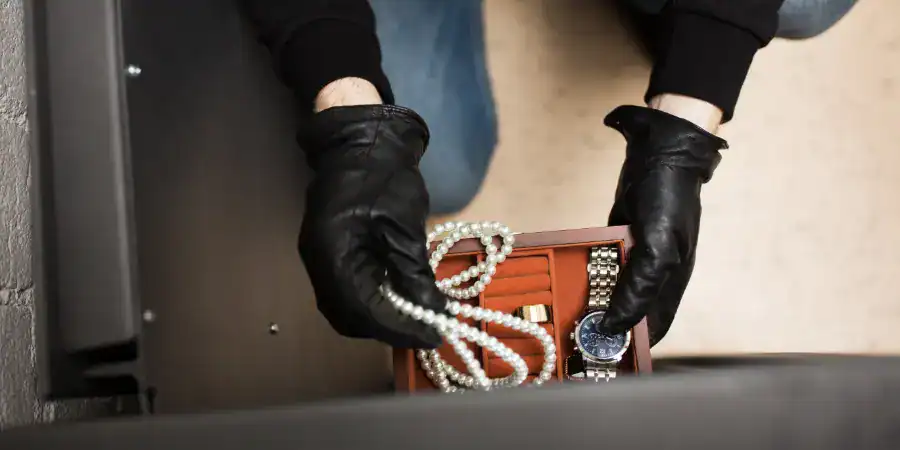
Even the strongest safe has limits.
No safe is 100% burglar-proof. Skilled intruders can breach almost any safe with enough time and the right tools.
The true value of a safe is measured in its ability to delay a break-in. The longer it can hold out, the more likely the intruder is to give up or get caught.
The Reality of Burglaries & Time
Most burglaries are fast.
- The average home intruder wants to be in and out in less than ten minutes.
- Burglars rarely bring heavy-duty tools.
- Most rely on what’s available on-site: pry bars, hammers, screwdrivers, etc.
What does this mean for your safe?
- Heavy, bolted-down safes usually deter casual thieves.
- Most intruders move on if a safe can’t be opened quickly or quietly.
But targeted break-ins are different.
- Professional thieves bring advanced tools and plan for more time.
- High-value targets require higher protection.
How much time do you need to buy? It depends on your risk.
Understanding Safe Security Ratings
Independent groups like Underwriters Laboratories (UL) test and rate safes, providing resistance time frames for specific attacks.
Residential Security Container (RSC)
- Common in home safes.
- Must survive five minutes of intensive prying, drilling, and hammering.
- Tested by professionals using heavy tools.
Keep in mind that five minutes of non-stop expert attack might discourage an average burglar for much longer.
TL-15 & TL-30 Ratings
- Found on commercial and high-end home safes.
- TL-15: Withstands 15 minutes of dedicated attacks with professional tools.
- TL-30: Withstands 30 minutes under similar testing.
Testers use cutting wheels, power saws, and drills. The clock runs only when tools are actively working on the safe.
TRTL Ratings
- For top-tier protection (e.g., jewelry stores, banks).
- TR = Torch Resistant, TL = Tool Resistant.
- TRTL-30: Survives 30 minutes against torches and heavy tools.
Materials That Delay Intruders
The safe’s construction directly affects its resistance.
Thin sheet metal
Little protection, easily breached with a crowbar.
Thick steel plate
For notable burglary protection, look for:
- At least ½ inch solid steel doors.
- Steel walls at least ¼ inch thick.
Composite construction
Concrete and steel mix between steel layers:
- Dulls and destroys drill bits.
- Resists cutting wheels.
Locking Mechanisms & Boltwork
Even the strongest door is vulnerable if the lock is weak.
- Attackers often target locks using drills, sledgehammers, or punches.
Quality safes add protection.
- Hard plates: Hardened steel behind the lock, shatters or stalls drill bits.
- Glass relockers: Tempered glass tripwires connected to backup bolts; if broken, bolts slam shut and lock the door permanently.
Real-World Scenarios vs. Test Conditions
Lab tests are tough — much tougher than most real break-ins.
- Testers know all the weak points.
- They have the best tools on hand.
But in a real burglary, intruders are rushed, stressed, and lack schematics. They’re worried about alarms and attention.
A safe rated for 15 minutes in testing may last hours in real life.
Installation matters as much as safe quality.
- Unbolted, lightweight safe? Burglars may steal the whole safe.
- Properly bolted down? Intruders can’t easily tip it or carry it off, forcing them to attempt an on-site break-in, which takes longer and increases their risk.
How to Choose the Right Safe for Your Needs
Your decision depends on:
- The value of what you’re protecting.
- The types of risks you face (opportunistic burglar vs. targeted theft).
- Insurance requirements.
For passports, keepsakes, and small cash:
- Choose a quality RSC-rated safe.
- Always bolt it down.
For jewelry, cash, precious metals:
- Go for TL-15 or TL-30 rated safes.
- Check with your insurance carrier for recommended requirements.
Conclusion
No safe is invincible. But a well-chosen, properly installed safe can:
- Stall thieves for minutes that feel like hours.
- Increase the likelihood they’ll give up or get caught.
- Provide a critical delay until law enforcement arrives.
Start with understanding what you need to protect and tailor your safe’s resistance to that goal.
FAQs About Safe Security
What does “RSC” stand for on a safe?
RSC means Residential Security Container. Rated by UL, it shows the safe withstood a five-minute attack using typical hand tools.
Are fire safes good for preventing burglaries?
Not really. Most fire safes are thin metal over fireproof drywall. Basic tools like a pry bar can open many in under a minute.
Can a burglar cut a safe open with a grinder?
Yes, but it’s not easy. Regular steel can be cut with time and enough grinder wheels. Composite safes quickly destroy grinder wheels.
What is a glass relocker?
It’s a piece of tempered glass inside some safes, connected to spring-loaded bolts. If someone attacks the lock, the glass breaks, and the backup bolts lock the safe instantly.
How thick should the steel be on a burglar safe?
Look for:
- Doors: At least ½ inch solid steel.
- Walls: At least ¼ inch steel.
The thicker the steel, the more time it buys you.
Does bolting a safe down improve its resistance to forced entry?
Absolutely. Bolting stops burglars from tipping the safe or stealing it outright. It forces them to work harder and longer.
What is the difference between TL-15 and TL-30?
- TL-15: Tested against professional tools for 15 minutes.
- TL-30: Same test, but for 30 minutes.
Both are for determined, professional break-ins, not quick smash-and-grabs.
Should I hide my safe or leave it visible?
Hide it. Burglars can’t attack what they can’t find. Concealment plus proper installation = added security.