

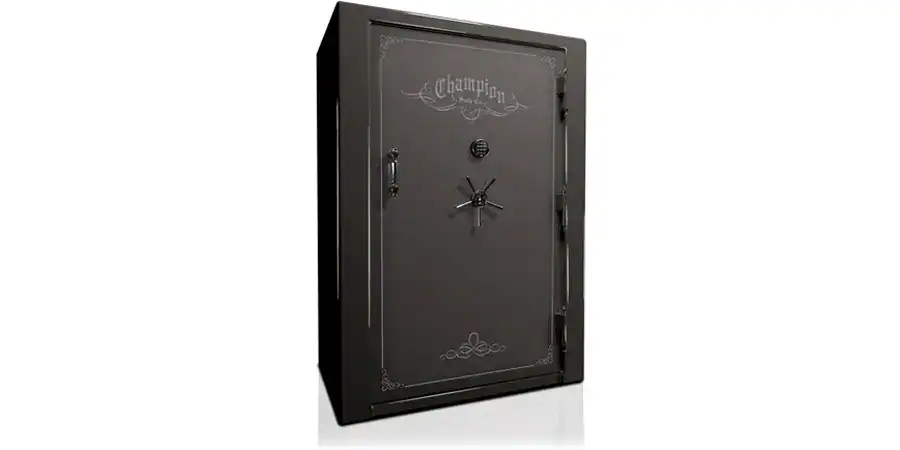
Your safe protects what matters most, from irreplaceable family heirlooms and hard drives to vital documents like passports and deeds.
But safes aren’t “set and forget” appliances. Over time, locking mechanisms wear down, fire-protection seals degrade, and security tech gets outdated, quietly leaving your valuables exposed.
Keeping ahead of these vulnerabilities is the only way to ensure your peace of mind and protect your valuables against the threats your old safe may no longer handle.
Sign 1: Outdated Fire & Burglary Ratings
Safes have ratings that tell you how long they resist fire and forced entry. Older safes often fall short of current standards.
- Check the fire rating. Look for a UL or ETL fire rating (for example, 1 hour at 1700°F). No rating means little real protection.
- Check the burglary rating. Ratings like UL RSC (Residential Security Container) show tested resistance to prying and drilling.
- Watch for missing labels. If you can’t find a rating, the safe likely offers basic theft deterrence at best.
Upgrade if: Your safe lacks a fire rating, or you’re storing documents, drives, or heirlooms that can’t withstand heat.
Sign 2: A Weak or Failing Locking Mechanism
When a lock starts acting up, your security is already compromised.
- Sticky dials or worn keys signal mechanical wear.
- Slow or glitchy electronic keypads may fail when you least expect it.
- Lockouts and dead batteries can trap your valuables inside.
- Single-point locking (one bolt) is far easier to force than multi-point systems.
Upgrade if: Your lock jams, lags, or relies on a single bolt. Modern options include redundant locks, biometric fingerprint scanners, and backup key overrides.
Sign 3: You’ve Outgrown the Space
Most people buy a safe that fits today’s needs, not tomorrow’s. Valuables add up fast.
- You’re stacking items or struggling to close the door.
- New additions like firearms, extra documents, or larger electronics no longer fit.
- No interior organization means items get scratched or lost.
Upgrade if: You’re cramming things in. A good rule: choose a safe with roughly 50% more capacity than you currently need.
Sign 4: Lifestyle Changes
Life shifts, and your security needs shift with it. A safe that fit five years ago may no longer fit your current situation.
- New valuables: Inherited jewelry, a growing coin or watch collection, or important business records.
- Family changes: Kids in the house mean securing medications and firearms responsibly.
- Remote work: Home offices now hold sensitive client data and backup drives.
- Home value increases: Higher-value homes attract more sophisticated theft attempts.
Upgrade if: Your responsibilities have grown beyond what your current safe was designed to protect.
Sign 5: Poor Placement or Installation Options
A safe that can’t be anchored is an easy target. Burglars often carry the whole unit away.
- No bolt-down holes means thieves can simply walk off with it.
- Lightweight build offers little resistance to removal.
- Awkward size makes it hard to hide in a closet floor or wall.
Upgrade if: Your safe can’t be bolted to the floor or wall. Anchoring is one of the simplest, most effective security steps you can take.
Sign 6: Visible Damage or Age
Wear and tear weakens even a quality safe over time.
- Rust or corrosion, common in coastal SoCal humidity, eats away at metal and seals.
- Damaged door seals reduce fire and water protection.
- Dents or pry marks suggest the safe has already been tested.
Upgrade if: You see rust, broken seals, or signs of tampering.
What to Look for in a Better Safe
Ready to upgrade? Focus on features that match your home and risks.
- Fire rating: At least 1 hour for documents and electronics.
- Burglary rating: UL RSC or higher.
- Solid locking: Multi-point bolts plus a reliable lock type (biometric, electronic with key backup).
- Anchoring kit: Pre-drilled holes and included hardware.
- Water resistance: Helpful for flood or sprinkler scenarios.
- Right size: Room to grow.
A Quick DIY Installation Tip
Anchoring a new safe is an intermediate DIY job most homeowners can handle in an afternoon.
- Choose a discreet spot, ideally a closet corner or concrete floor.
- Mark the bolt holes through the safe’s pre-drilled openings.
- Drill into the floor using a masonry or wood bit as needed.
- Insert anchors and tighten bolts until the safe sits flush and firm.
- Test the door to confirm smooth operation.
For concrete slabs, source masonry anchors from your local hardware store, and wear safety glasses while drilling.
FAQs: Upgrading a Safe
Q: How long should a home safe last?
A quality safe can last 20 years or more, but ratings, locks, and seals may become outdated long before the body wears out.
Q: Is a fireproof safe really necessary in Southern California?
Yes. Wildfire risk and standard house fires make fire ratings a smart priority for documents and electronics.
Q: Are biometric safes reliable?
Modern biometric safes are dependable and fast. Choose one with a key or code backup in case of low batteries.
Q: Can I install a safe myself?
Yes. Anchoring a safe is a manageable DIY project with basic tools and the right anchors for your floor type.
Q: How big a safe do I need?
Pick one with about 50% more capacity than your current valuables, leaving room for future additions.
Q: Should I bolt my safe down?
Always. Anchoring prevents thieves from carrying the entire safe away, which is one of the most common theft methods.
Q: What’s the difference between a fire rating and a burglary rating?
Fire ratings measure heat resistance over time. Burglary ratings measure resistance to forced entry. You want both.
Q: Is it worth upgrading, or should I just add a second safe?
If your current safe lacks proper ratings or a strong lock, upgrade. Add a second safe only when your main unit is solid, but space is tight.