

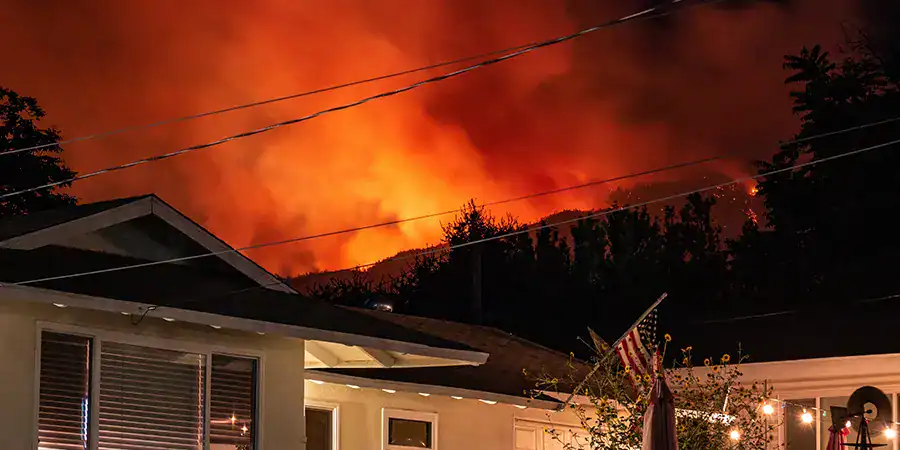
To protect your home and property from wildfires, start by creating defensible space, reducing ember risks, and preparing for emergencies before a fire is nearby. Important steps include clearing brush, keeping roofs and gutters clean, using fire-resistant materials, securing valuables, and having an evacuation plan.
Homeowners can take on some of these tasks, but jobs like roof work, tree trimming, and clearing brush on steep slopes are often safer and more effective when done by professionals.
Proper Preparation Is Important
Southern California offers great weather for much of the year, but it also comes with the risk of wildfires. High winds, drought conditions, and dry brush can quickly turn a small spark into a serious emergency for the whole neighborhood.
Is there really a true “wildfire season” anymore? Some of the worst fires in recent years have occurred in winter, so it’s important to stay prepared year-round.
You should start protecting your home well before the Santa Anas start blowing, and the Watch Duty app notifications start blowing up your phone. A good wildfire plan includes:
- Creating and maintaining defensible space.
- Hardening your home against embers.
- Securing valuables and planning out evacuation routes.
- Knowing which projects are safe to do yourself and which should be left to professionals.
Experienced DIY homeowners can handle some maintenance, but other tasks are risky. Roof work, tree trimming, using chainsaws, cleaning gutters, and clearing brush on hillsides can lead to falls and serious injuries. For these jobs, it’s usually safer and wiser to hire trained professionals.
Getting prepared for wildfires is more than just clearing brush. It also means checking for weak spots, making upgrades to your property, and having a clear emergency plan.
Build a Defensible Space
Creating defensible space is one of the best ways to protect your home. This buffer between your house and nearby plants can slow or stop a fire and give firefighters space to work.
Clear Zone One (0–30 Feet)
Keep this area lean, clean, and green:
- Remove dead plants, weeds, and dry grass.
- Keep tree branches trimmed away from roofs and chimneys.
- Space tree canopies at least 10 feet apart.
- Move firewood, lumber, and combustible materials at least 30 feet from the house.
- Replace flammable mulch near your home with gravel or stone.
Maintain Zone Two (30–100 Feet)
Reduce fuel sources farther from the home:
- Cut annual grasses to four inches or less.
- Space shrubs and trees to prevent flames from climbing or spreading.
- Remove fallen branches and debris regularly.
- Reduce dense vegetation that could carry fire toward the house.
Special Considerations for Homes on a Slope
If your home is on a hillside, you need to take extra precautions because fire can spread quickly up a slope.
Consider:
- Extending defensible space beyond 100 feet where feasible.
- Using gravel or rock barriers in high-risk areas.
- Planting deep-rooted, fire-resistant vegetation for erosion control.
- Maintaining wider spacing between plants on slopes.
Clearing brush on steep slopes is usually not a job for homeowners. Uneven ground, erosion risks, power tools, and hard-to-reach areas make it dangerous. Professional crews have the right equipment and training to do this work safely.
Brush clearing is typically recommended at least annually, though high-risk properties may need more frequent maintenance.
Upgrade Your Home’s Exterior
During wildfires, not just flames but wind-blown embers can cause homes to catch fire, sometimes miles away from the main fire front. Strengthening your home’s exterior can greatly reduce this risk.
Install Fire-Resistant Vents
Standard attic, soffit, and crawl space vents can allow wind-driven embers to enter these spaces during a wildfire. Replacing older vents with ember-resistant venting can significantly reduce that risk.
- Many homes built in California wildfire-prone areas after 2008 were constructed under wildfire building codes that require stronger protections for vulnerable openings and have these fire-resistant vents.
- Older homes may still have outdated venting that can benefit from retrofitting.
- If you are unsure what type of vents your home has, a roofing or wildfire mitigation professional can help evaluate your setup.
Seal Windows and Doors
Improve protection by:
- Replacing worn weatherstripping.
- Sealing gaps around doors and windows.
- Upgrading to dual-pane tempered glass when possible.
These upgrades can also help your home use energy more efficiently year-round.
Don’t Overlook Your Roof
Your roof is especially at risk from embers.
Protect it by:
- Keeping roofs and gutters free of leaves and pine needles.
- Trimming overhanging branches.
- Choosing Class A fire-rated roofing materials when replacing a roof.
Cleaning gutters and working on your roof can be dangerous, especially if your home is steep or has more than one story. If you need to use ladders or get on the roof, it’s safer to hire a professional than risk a fall.
Review Your Home’s Security
Wildfire planning also means preparing for evacuation.
Store Valuables in a Fire-Rated Safe
A fire-rated safe adds extra protection for your valuables during a disaster.
Protect critical items such as:
- Passports and IDs
- Insurance documents
- Family heirlooms
- Digital backups
- Emergency cash
Evaluate Your Home’s Locks
If you need to evacuate, every second counts. You should be able to leave quickly, knowing your property is secure.
Evaluate your home’s security and consider:
- High-security locks or smart access systems.
- Rekeying locks if you’ve recently moved or you can’t account for keys.
- Repairing sticky locks or damaged hardware.
- Confirming doors lock quickly and reliably.
Plan Your Evacuation Route
Being prepared gives you more time in an emergency and will help keep you and your family calm.
Prepare a Go-Bag
Have emergency kits ready with:
- Water and non-perishable food, including pet food.
- Flashlights.
- First-aid supplies.
- Medications.
- Important documents.
- Extra house and car keys.
Check Your Exit Points
- Make sure all doors, gates, and windows open easily and lock properly.
- Share and practice evacuation routes with your household and have backup routes in case roads close.
Know When to Call a Professional
Wildfire preparation often includes projects better handled by experts. Professionals can often identify hazards that homeowners might miss and perform dangerous work much more safely.
Consider professional help for:
- Brush clearing on slopes or large lots.
- Tree trimming near power lines.
- Roof and gutter cleaning.
- Chimney and vent inspections.
- Installing ember-resistant vents.
- Fire-hardening upgrades.
- Defensible space evaluations.
Take Action to Protect Your Property
Being ready for wildfires is more than just reacting to danger. It means lowering your risk before fire season or fire weather starts.
Start with what you can safely tackle yourself:
- Seal gaps around doors and windows.
- Create defensible space.
- Organize your evacuation plan.
- Protect valuables in a fire-rated safe.
For higher-risk jobs, such as roof work, tree work, or brush-clearing on hillsides, hire qualified professionals.
Taking action now can make a big difference if your home is in the path of a wildfire later.
FAQs: Protecting Your Home from Wildfires
Q: Should I hire professionals to clear brush?
Yes, especially on steep, heavily vegetated, or difficult terrain. Professionals have the tools, safety gear, and expertise to reduce fire risk without creating hazards.
Q: How can I make my roof safer from embers?
Keep roofs and gutters clear of debris and choose Class A fire-rated roofing materials when replacing a roof. Also, replace any old attic vents with fire-resistant ones.
Q: What is the best way to keep smoke out of my house?
Keep windows and doors closed, use quality weatherstripping, and run your HVAC systems on recirculation.
Q: Are fire-resistant safes actually fireproof?
No safe is completely fireproof, but fire-rated safes are built to withstand high temperatures for a specified time.
Q: What plants are safe to plant near my home?
Succulents, aloe, and many native California plants are more fire-resistant than highly flammable species like eucalyptus or juniper.
Q: How often should I clean my gutters during wildfire season?
Inspect and clean gutters at least twice a year, and more often if your property has pine trees or heavy leaf drop. During periods of high winds, check for debris buildup regularly. If your home has a steep roof or difficult access, consider hiring a professional for safety.
Q: Can tree trimming reduce wildfire risk?
Proper tree trimming can help slow fire spread by reducing fuel and improving spacing between trees and structures. However, trimming large trees, removing limbs near power lines, or working with chainsaws can be dangerous. For major pruning or hazard-tree removal, it is often safest to hire a licensed arborist or tree service.
Q: Are professional wildfire home assessments worth it?
Yes. Many homeowners benefit from a professional defensible space or wildfire risk assessment. Experts can identify vulnerabilities you might overlook, such as entry points, vegetation hazards, and roofing risks, and recommend upgrades to improve your home’s resilience.