

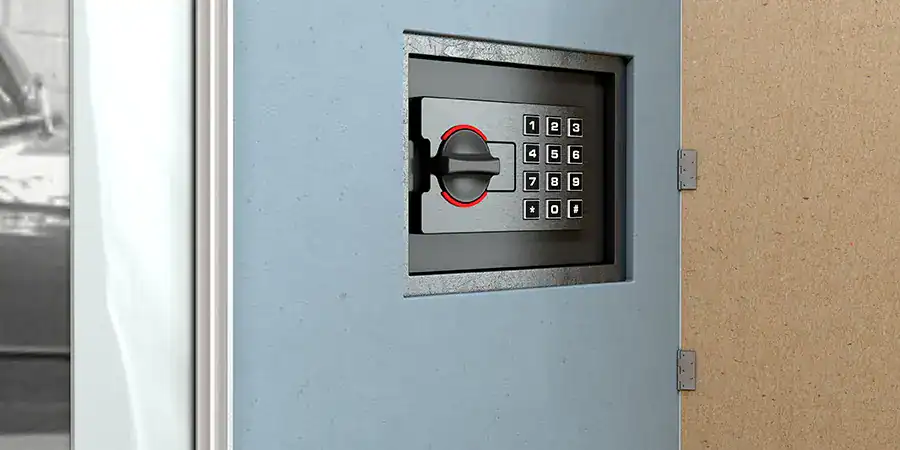
Buying a safe is only half the battle. Where and how you install it matters just as much. The right setup can improve security, keep valuables hidden, and make access more convenient.
For most homeowners, the choice comes down to two options: wall safes or floor safes. Each offers unique benefits depending on your space, budget, and security needs. Here’s how they compare so you can choose the best fit for your home.
Security & Concealment
Keeping the safe hidden is your first line of defense. Both options offer unique concealment strategies and security profiles.
Wall Safe Security & Concealment
- Eye-level hiding spots: Wall safes can easily be hidden behind large paintings, mirrors, or heavy pieces of furniture. Intruders often overlook these areas during a hurried break-in.
- Standardized security: Most wall safes feature strong steel doors and reliable locking mechanisms. However, the sides and back are often made of thinner metal, relying on your home’s wall studs for structural protection.
- Vulnerability to removal: Because they attach to wooden or metal studs, a highly determined burglar with the right tools and enough time could cut a wall safe out of the drywall.
- Fire rating challenges: True fire-rated wall safes are rare. The limited depth of standard wall cavities limits the thickness of insulation required to protect paper documents from intense heat.
Floor Safe Security & Concealment
- Ultimate concealment: Floor safes sit flush with the ground, hidden under rugs, carpets, or heavy furniture. A well-placed floor safe remains virtually invisible to anyone who doesn’t know its exact location.
- Concrete reinforcement: Installing a floor safe into a concrete foundation provides unmatched security. The concrete surrounds the safe on all sides, making it impossible to extract without heavy machinery and hours of jackhammering.
- Superior protection for heavy items: Because floor safes rest in the ground or foundation, they can support heavy loads (all your gold bars?), allowing for thicker steel construction and heavier locking bolts.
- Natural fire resistance: The surrounding concrete and earth provide a natural heat sink. Even without a specific fire rating, a floor safe submerged in concrete protects contents from high temperatures significantly better than a standard wall safe.
Installation Complexity & Cost
Wall Safe Installation
- DIY friendly: The process usually involves locating wall studs, cutting a precise hole in the drywall, sliding the safe in, and bolting it to the framing.
- Standard dimensions: Wall safes are manufactured to fit between standard 16-inch on-center wall studs.
- Lower installation costs: If you hire a professional, labor costs remain relatively low. A handyman or locksmith can typically complete the job in an hour or two.
- Retrofitting ease: Adding a wall safe to an existing, fully built home requires minimal disruption to your daily life or property structure.
Floor Safe Installation
- Highly complex process: Professionals must cut through the foundation, excavate the dirt beneath, position the safe, and pour new concrete to secure it.
- Significant labor costs: Due to the heavy machinery, concrete work, and structural considerations, floor-safe installation costs much more than wall installation.
- Ideal for new construction: The most cost-effective time to install a floor safe is before pouring a home’s foundation. Integrating it during the initial build phase saves substantial money and effort.
- Wood floor complications: You can install floor safes in homes with raised wooden foundations, but they must have a reinforced structural box between the floor joists to support the safe’s immense weight.
Accessibility & Space Considerations
How often you need to open your safe dictates which installation type will best suit you.
Wall Safe Accessibility & Space
- Everyday convenience: Wall safes sit at a comfortable height. You can access your items while standing upright, making this the best option for frequently used items.
- Quick access: If you need to retrieve something in a hurry, entering a code on an eye-level keypad takes only seconds.
- Strict space limits: The standard depth of a residential wall cavity is only 3.5 to 4 inches. You can’t store bulky items, large boxes, or heavy equipment in a standard wall safe.
- Organized storage: Despite their shallow depth, wall safes often feature built-in shelves, making it easy to organize cash, passports, small jewelry, and digital storage drives.
Floor Safe Accessibility & Space
- Physical strain: Accessing a floor safe requires bending, kneeling, and lifting a heavy steel door at an awkward angle. This proves difficult for individuals with limited mobility or back issues.
- Poor lighting: Looking down into a dark hole in the floor makes it hard to see your items. You will often need a flashlight or a safe with built-in interior lighting.
- Massive storage capacity: Floor safes offer deep, cavernous storage. You can secure bulky valuables, large collections of precious metals, and sizable document lockboxes with ease.
- Slower retrieval: Moving a rug, lifting a heavy dust cover, and operating a dial or keypad near the floor slows the retrieval of your belongings.
Long-Term Practicality & Ideal Use Cases
Wall Safe Practicality
- Easy removal when moving: If you sell your home, you can easily unbolt the wall safe, take it with you, and patch the drywall.
- Moisture protection: Sitting high up on a wall keeps your valuables completely safe from minor household flooding or plumbing leaks.
- Ideal use cases: Best suited for cash on hand, daily-wear jewelry, passports, emergency self-defense tools, and prescription medications.
Floor Safe Practicality
- Permanent fixture: Once encased in concrete, a floor safe stays with the house forever. You will need to leave it behind if you move.
- Flood risks: Floor safes sit at the lowest point in your home. Even a minor plumbing leak can pool water over the safe. Many floor safes feature water-resistant dust covers, but you should still store items in waterproof bags for complete protection.
- Added property value: A professionally installed floor safe acts as a permanent premium security feature that appeals to future homebuyers.
- Ideal use cases: Best suited for gold and silver bullion, rare coin collections, sensitive long-term documents, and high-value heirlooms you rarely need to touch.
The Verdict
Choosing between a wall safe and a floor safe comes down to balancing convenience against maximum security.
Select a wall safe if you prioritize quick, comfortable access and plan to store smaller items like passports, cash, and daily jewelry. The installation is affordable, minimally invasive, and allows you to take the safe with you if you move.
Choose a floor safe if you need to store large, bulky, or extremely valuable items that require the highest level of protection. While the installation process demands a higher budget and permanent commitment to your property, the concrete-encased security and immense storage capacity remain unmatched.
FAQS: Wall Safes vs Floor Safes
Q: Can I install a floor safe myself?
While you can install a floor safe yourself if your home has a raised wooden floor, installing one into a concrete foundation requires heavy machinery, structural knowledge, and concrete masonry skills. We recommend hiring a professional for concrete slab installations to ensure structural integrity and proper sealing.
Q: Are wall safes fireproof?
Most standard wall safes are not truly fireproof. They lack the depth required to hold thick fire-retardant insulation. The drywall surrounding the safe provides some fire resistance, but it won’t protect sensitive documents from sustained, intense heat.
Q: Will a floor safe ruin my foundation?
A professionally installed floor safe won’t ruin your foundation. Contractors carefully cut the slab and pour fresh concrete around the safe, which bonds with the existing foundation. This process maintains the structural integrity of your home.
Q: Can a burglar simply cut a wall safe out of the wall?
Yes, it’s possible to cut a wall safe out of the drywall and studs using a reciprocating saw. However, this creates a massive amount of noise and takes considerable time. Most burglars rely on speed and silence, making this a rare occurrence.
Q: How do I protect the contents of my floor safe from water damage?
Because floor safes sit low to the ground, they’re vulnerable to plumbing leaks or flooding. Always store your documents and valuables inside heavy-duty, waterproof bags or sealed plastic containers before placing them in a floor safe.
Q: Do wall safes fit in every home?
Most wall safes are designed to fit between standard wall studs spaced 16 inches apart. If your home features non-standard framing, older lath-and-plaster walls, or shallow exterior walls, you may need a custom installation or a different type of safe.
Q: Can I put a floor safe on the second floor of my house?
We don’t recommend it. The floor joists may not support the weight of the safe and its contents, and the safe will lack the concrete reinforcement that gives floor safes their primary security advantage.
Q: What happens to my floor safe if I sell my house?
A floor safe embedded in concrete becomes a permanent fixture of the property. When you sell your home, the safe stays behind. You can highlight it as an added security feature to potential buyers.