

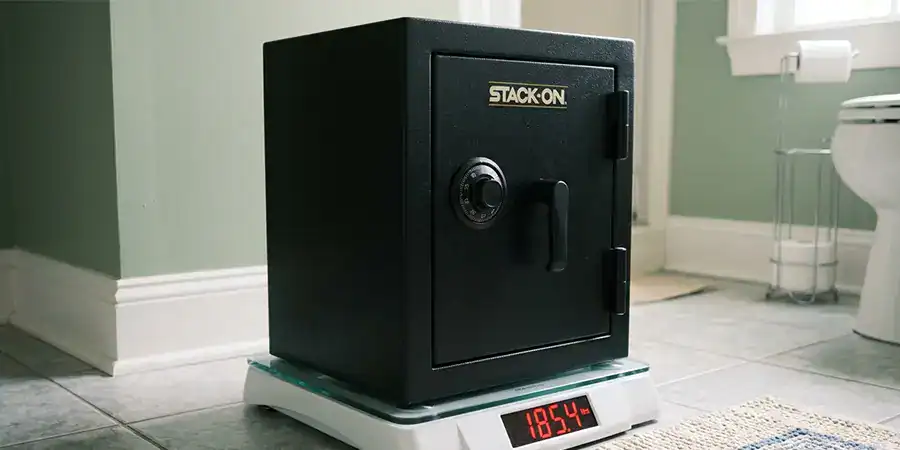
Everyone’s trying to lose weight. Except when it comes to safes. Heavier must mean safer, right?
Not exactly. Weight matters, but it’s just one piece of a much bigger picture. Let’s see what it actually takes to keep your valuables protected.
What Makes a Safe Truly Secure
Weight alone won’t stop a determined burglar or protect your documents from a house fire.
A combination of factors will.
- Steel thickness in the door and body
- Quality of the locking mechanism
- Fire and water resistance ratings
- Anchoring options that bolt the safe in place
- Tamper-resistant construction around the door seams
- Independent security ratings from testing labs
In home security, a single deadbolt helps, but layered protection is best. The same logic applies to your safe.
Key Security Features to Look For
Before you focus on weight, check these features first.
- Body and door steel gauge: Lower gauge numbers mean thicker steel. Look for 12-gauge or thicker on the body.
- Boltwork: More locking bolts spread across multiple sides create stronger resistance.
- Hardplate protection: A steel plate behind the lock stops drilling attacks.
- Relockers: These trigger extra locks if someone attacks the primary lock.
- Pry-resistant door: A tight, recessed door gives burglars nothing to grab with a crowbar.
- UL security ratings: Underwriters Laboratories tests safes against real break-in attempts.
A safe can be heavy and still lack these features. Don’t let the scale seduce you.
The Real Role of Weight in Burglary Resistance
Weight does matter, but for a specific reason: it makes a safe harder to steal outright.
- Lighter safes get carried away. A thief can lift a 100-pound safe and open it later at their leisure.
- Heavier safes stay put. A 750-pound safe is tough to move without equipment and time.
- Weight buys you nothing if the safe isn’t anchored. Even a heavy safe can be tipped, rolled, or dollied out.
- Weight often correlates with steel thickness. Heavier usually means more metal, which does improve resistance.
Weight discourages grab-and-go theft, but anchoring and construction do the heavy lifting for security.
Fire & Water Protection
Wildfire season is a real danger in Southern California, and a burst pipe or storm can flood a room fast. Your safe should handle both threats.
Fire protection
- Fire rating in minutes: Common ratings are 30, 60, 90, or 120 minutes.
- Temperature threshold: Paper burns near 350°F, so look for safes rated to keep their interiors below that temperature.
- Media protection: Digital drives and photos need cooler ratings, often below 150°F.
Water protection
- Waterproof seals around the door
- Submersion ratings listed in hours and inches of water
- Elevated design that keeps the base off wet floors
A quick tip: store documents and drives in sealed bags inside the safe for an extra layer of defense.
Locking Mechanisms Explained
Dial combination locks
- Reliable and battery-free
- Slower to open
- No electronics to fail
Electronic keypad locks
- Fast, easy entry
- Programmable codes
- Depend on batteries
Biometric (fingerprint) locks
- Quick access
- Convenient for emergencies
- Best paired with a backup key or code
Dual locks
- Combine two methods for extra security
- Ideal for firearms or high-value items
Whatever you choose, look for a lock with UL Type 1 certification or better. That rating means the lock passed rigorous durability and security testing.
Anchoring: The Feature Many Homeowners Skip
Anchoring turns a movable box into a fixed fortress. This step matters more than most people realize.
- Bolt-down kits secure the safe to concrete or a wood subfloor.
- Pre-drilled anchor holes make installation simple.
- Floor anchoring stops tipping and dragging.
- Wall anchoring adds stability for taller safes.
DIY anchoring guide
- Position the safe in a corner for added support.
- Mark the anchor holes on the floor.
- Drill pilot holes using the right bit for your surface.
- Insert anchor bolts and tighten firmly.
- Test that the safe doesn’t shift.
This is an intermediate project that most homeowners can finish in under an hour.
Price vs. Quality: Getting Real Value
Expensive isn’t always better. Focus on value for your needs.
- Budget safes ($100–$300): Fine for basic document storage and casual theft deterrence.
- Mid-range safes ($300–$800): Better steel, real fire ratings, and solid locks.
- Premium safes ($800+): Heavy-duty construction, high fire and burglary ratings, and long warranties.
Smart buying tips:
- Match the safe to the risk. A few documents don’t need a gun-safe-grade vault.
- Check the warranty. Many quality brands offer fire and burglary replacement coverage.
- Read the ratings, not just the price tag. A well-rated mid-range safe often beats a pricey model with weak specs.
- Factor in installation. A safe you anchor yourself saves on professional fees.
The goal: pay for the protection you actually need, not for pounds you don’t.
The Bottom Line
Weight matters, but it’s not the whole story.
A truly secure safe blends thick steel, a certified lock, solid fire and water protection, and proper anchoring.
Buy for your real risks, anchor it well, and you’ll protect what matters most, no matter how much it weighs.
FAQs: Safe Weight & Security
Q: Does a heavier safe mean it’s more secure?
Not always. Weight helps prevent theft, but steel thickness, lock quality, and anchoring matter far more for real security.
Q: How heavy should a home safe be?
For meaningful theft resistance, aim for at least 300–500 pounds, or anchor a lighter safe to the floor.
Q: Can a burglar steal a heavy safe?
Yes, if it isn’t anchored. Thieves use dollies and tools to remove even heavy safes, so bolting it down is essential.
Q: What fire rating should I look for?
A 60-minute rating suits most homes. Choose 90 or 120 minutes if you store irreplaceable documents or digital media.
Q: Are electronic locks reliable?
Yes, quality electronic locks are reliable. Just replace batteries regularly and pick a model with a backup key or code.
Q: Can I anchor a safe myself?
Absolutely. With a bolt-down kit, a drill, and the right bits, most homeowners finish anchoring in under an hour.
Q: Do I need a waterproof safe in Southern California?
It’s smart. Burst pipes, storms, and firefighting water can all reach your safe, so water resistance protects your valuables.
Q: Is an expensive safe always better?
No. A well-rated mid-range safe often outperforms a pricey model with weak specs. Match the safe to your actual needs.