

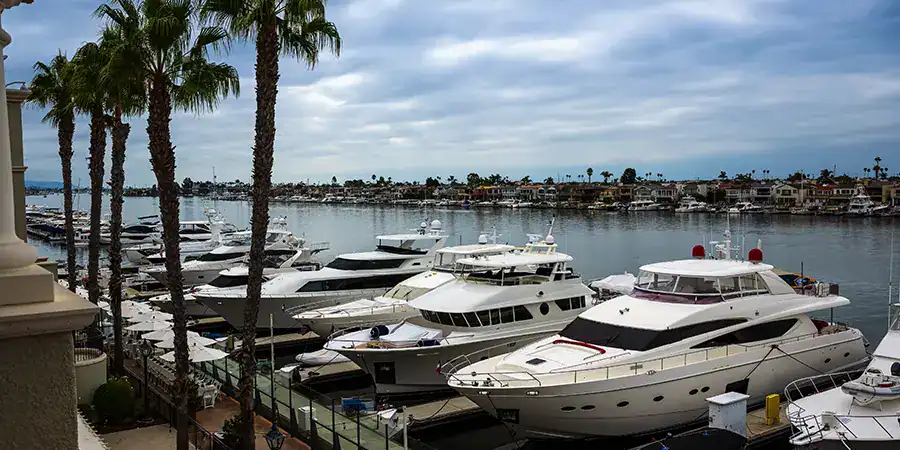
Between coastal thieves and brutal salt air, a cheap lock is an open invitation. Marinas from San Diego to Marina del Rey lose outboards, dinghies, and entire boats every year — and standard hardware-store locks corrode or snap under bolt cutters in no time.
Don’t trust generic “heavy-duty” labels. Purchase marine-grade locks built to withstand saltwater and keep your vessel, gear, and slip secure.
1. Stainless Steel Marine Padlocks
Stainless steel padlocks are the baseline for marine security.
- Look for 316-grade stainless steel. It resists saltwater corrosion far better than 304-grade, which is more common and will rust near the ocean.
- Choose a lock with a boron-alloy shackle. Standard steel shackles can be cut with bolt cutters in seconds; boron alloy resists cutting tools.
- Check the IP rating. An IP65 or higher rating means the lock is sealed against water intrusion, which matters for anything mounted below deck or near the waterline.
- Rinse with fresh water after each use. Even corrosion-resistant steel benefits from regular rinsing to remove salt buildup.
Brands like Abus and Master Lock both make marine-rated padlocks that hold up to years of exposure, provided you maintain them.
2. Keyless Combination & Keypad Locks
Losing a key in the water is a common and expensive problem. Keyless locks solve it.
- Combination padlocks eliminate the risk of losing a key overboard, which is especially useful for frequently accessed locks, such as dock boxes or lazarette hatches.
- Keypad locks with programmable codes let you grant temporary access to guests, mechanics, or marina staff without having to duplicate keys.
- Weatherproof housing is non-negotiable. Look for locks rated for saltwater exposure, since internal electronics or mechanisms can corrode quickly without sealing.
- Battery backup matters for electronic keypads. Choose one with a low-battery warning so you’re never unexpectedly locked out.
Keyless locks work best for fixed access points, such as storage compartments, not for securing a boat to a dock cleat, where a cable or chain lock is better.
3. Hasp & Staple Locks for Hatches & Compartments
Hasp and staple sets reinforce weak points like hatches, lazarettes, and storage lockers.
- Use a hasp made from marine-grade stainless steel or hot-dipped galvanized steel to match the corrosion resistance of your padlock.
- Choose a hidden-shackle hasp design. This prevents bolt cutters from getting leverage on the padlock shackle.
- Through-bolt the hasp instead of using screws. Screws pull out easily under force; bolts with backing plates distribute stress across the hatch material.
- Pair with a padlock rated for the shackle diameter of the hasp. A mismatched size leaves gaps that weaken the whole setup.
This combination is one of the most overlooked upgrades for boat owners who assume their factory hatch latches are secure enough. They usually aren’t.
4. Outboard Motor Locks
Outboard motors are a top target for theft because they’re valuable, portable, and easy to resell.
- Install a dedicated motor lock that clamps over the motor’s mounting bracket, preventing it from being tilted up and removed.
- Look for locks compatible with your motor’s horsepower class, since bracket sizes vary between small and large outboards.
- Combine with a motor alarm for an added deterrent. Some models trigger a loud alert if the motor is tampered with or tilted unexpectedly.
- Inspect the lock’s mounting hardware seasonally. Vibration from engine use can loosen bolts over time.
McGard and Tracker Lock manufacture outboard-specific locks designed to resist prying and drilling.
5. Cable & Chain Locks for Dinghies, Kayaks & Small Watercraft
Small watercraft left on a dock or beach need flexible, portable security.
- Vinyl-coated steel cables protect your boat’s hull from scratches while still offering cut resistance.
- Choose a cable with a braided steel core, not a single-strand design, since braided cables are far harder to cut cleanly.
- Hardened chain locks offer more resistance than cable locks for high-theft areas, though they’re heavier and less convenient to carry.
- Secure the lock to a fixed point, like a dock cleat or piling, not just looped through the watercraft itself.
For kayaks and paddleboards left at public launch points, a cable lock is often the only practical option, so don’t skip it even for short trips.
6. Dock Box & Storage Locker Locks
Dock boxes hold life jackets, tools, and fuel cans. All items are worth stealing if left unsecured.
- Use a weatherproof padlock rated for constant outdoor exposure, since dock boxes are exposed to direct sun and salt spray year-round.
- Reinforce the box’s latch with a hasp if the factory latch is thin sheet metal that’s easy to pry open.
- Consider a keypad lock for boxes accessed by multiple people, like a family or marina co-op.
- Check seals and hinges regularly. A secure lock doesn’t help if the box itself has a weak hinge that can be forced open.
7. Yacht Slip Gate & Access Locks
Marina slip gates are the first line of defense for your entire vessel, and shared-access points are often the weakest link.
- Don’t rely solely on the marina’s gate lock. Add a personal lock to your slip’s dock box, power pedestal cover, or storage area for an extra layer of protection.
- Ask your marina about electronic gate access logs. Some marinas can show you who entered and when, which helps if an incident occurs.
- Report damaged or propped-open gates immediately. A broken slip gate compromises every boat owner at that marina, not just yours.
- Consider a personal security camera near your slip. Combined with strong locks, video evidence significantly increases the odds of recovering stolen property.
Protecting Your Investment Takes the Right Hardware
Marine-grade locks aren’t just about preventing theft. They’re about protecting the time, money, and memories tied up in your boat. Choosing corrosion-resistant materials, reinforcing weak points like hatches and hasps, and layering your security with cables, padlocks, and keypad systems gives you the best defense against both thieves and the elements.
Start with an inventory of your boat’s access points, then match each one with the right lock type from this list. A little upfront investment in quality hardware saves you from a much larger loss down the line.
FAQs: Marine Locks
Q: What grade of stainless steel is best for marine locks?
316-grade stainless steel is the top choice for marine environments. It contains molybdenum, which significantly improves resistance to saltwater corrosion compared to the more common 304-grade steel.
Q: Can bolt cutters get through a marine padlock?
Standard steel shackles can be cut with bolt cutters in seconds. Locks with boron-alloy or hardened-steel shackles, as well as hidden-shackle designs, offer much greater resistance to cutting tools.
Q: Are keyless locks reliable in a marine environment?
Yes, as long as they’re rated for saltwater exposure and have sealed, weatherproof housing. Look for an IP65 rating or higher, and choose models with battery backup and low-battery alerts.
Q: How often should I replace a marine lock?
Most marine-grade locks last 3-5 years with regular maintenance, including freshwater rinsing and periodic lubrication. Inspect locks each season for rust, stiffness, or shackle damage.
Q: What’s the best way to secure an outboard motor?
A dedicated outboard motor lock that clamps over the mounting bracket is the most effective solution. Pairing it with a motor alarm adds an extra layer of deterrence.
Q: Do I need a lock if my boat is in a gated marina?
Yes. Marina gates reduce casual theft but don’t eliminate it. Shared access points, propped-open gates, and determined thieves mean personal locks on your boat, motor, and storage are still essential.
Q: What’s the difference between cable locks and chain locks?
Cable locks are lighter, more flexible, and easier to carry, making them ideal for kayaks and small watercraft. Chain locks are heavier but offer greater cut resistance, making them better suited for high-theft areas.
Q: How do I protect a dock box from being pried open?
Reinforce the factory latch with a marine-grade hasp-and-staple set, then secure it with a weatherproof padlock. Check the box’s hinges periodically, since a weak hinge can undermine even the strongest lock.