

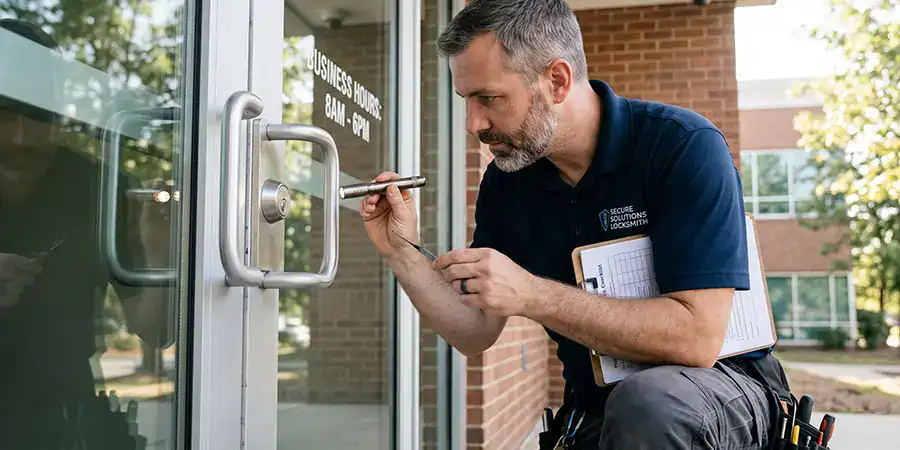
An intruder doesn’t view your building the way you do.
Where you see a routine back door or a sturdy glass entrance, they see a 30-second opportunity. In a target-rich market like Orange County, passive security doesn’t cut it anymore.
Bringing in a commercial locksmith for a comprehensive security audit gives you a tactical, insider view of your property’s vulnerabilities. From high-grade deadbolts to electronic access logs, here’s the checklist a locksmith might use to safeguard your business.
1. Exterior Doors & Locks
A locksmith inspects the front and back doors for:
- Worn or outdated locks
- Loose hinges and strike plates
- Gaps between the door and frame
- Signs of tampering or forced entry
They’ll test whether your deadbolts extend fully into the frame. A bolt that reaches only halfway offers little protection. Most commercial break-ins happen at these doors, so this step is crucial.
Ask about Grade 1 commercial locks. They’re built for high-traffic use and resist picking better than residential hardware.
2. Door Frames & Strike Plates
A strong lock on a weak frame is useless. Kick-ins exploit the frame, not the lock. A locksmith checks that:
- Strike plates are secured with 3-inch screws
- The frame is solid and free of rot or cracks
- Reinforcement plates are installed where needed
Upgrading a strike plate costs little but dramatically increases resistance to forced entry.
3. Window Locks & Access Points
Windows are an easy target, especially ground-floor and rear-facing ones. The locksmith examines:
- Window latch condition
- Whether locks actually engage
- Vulnerable basement or side windows
They may recommend secondary locks or security film for glass that faces alleys or parking lots.
4. Master Key Systems
If you’re handing out keys to employees, cleaners, and vendors, you may have lost track of who has which key. A locksmith reviews your key control by checking:
- How many keys exist, and who has them
- Whether keys are duplicated easily
- If a master key system fits your needs
A master key system lets you control access by role — managers get more access, seasonal staff get less. When someone leaves, you rekey one lock instead of replacing all the locks.
5. Access Control Systems
Many Orange County businesses have moved past traditional keys. A locksmith evaluates electronic access, including:
- Keypad and card reader function
- Keyless entry and smart locks
- Audit trails that log who entered and when
These systems eliminate the risk of key duplication and let you revoke access instantly. For businesses with high staff turnover, they’re worth the investment.
6. Safes & Secure Storage
If you store cash, documents, or inventory, the locksmith inspects your safe for:
- Proper anchoring to the floor or wall
- Working lock mechanisms
- Fire and burglary ratings
An unanchored safe can be carried off. A locksmith will confirm yours is bolted down and rated for what you’re protecting.
7. Emergency Exits & Panic Hardware
Security and safety go hand in hand. A locksmith checks that exit doors:
- Open freely from the inside
- Meet local fire codes
- Have working panic bars
An exit that’s locked or blocked is both a safety hazard and a legal liability. This step keeps you compliant and your staff safe.
8. Lighting & Surrounding Areas
Good security extends beyond the door. Locksmiths often note:
- Poorly lit entrances and parking areas
- Blind spots near doors and windows
- Overgrown landscaping that hides entry points
Bright, motion-activated lighting deters most intruders before they try anything.
9. Master Recommendations Report
After the walkthrough, a good locksmith gives you a written summary that includes:
- Every vulnerability found
- Priority fixes versus long-term upgrades
- Cost estimates for each recommendation
This report becomes your roadmap. You can tackle urgent items now and budget for the rest.
FAQs: A Locksmith’s Audit of OC Business Security
Q: How long does a business security audit take?
Most audits take 1–2 hours, depending on your building’s size and number of entry points. Larger properties with multiple doors and access systems may take longer.
Q: How much does a locksmith security audit cost?
Prices vary, but many Orange County locksmiths charge a flat fee or offer a free audit with service work. Ask upfront so there are no surprises.
Q: How often should I schedule a security audit?
Once a year is a good baseline. Also, schedule one after a break-in, a staff change involving key holders, or any renovation.
Q: Can a locksmith rekey my business instead of replacing locks?
Yes. Rekeying changes the internal pins so old keys no longer work. It’s faster and cheaper than replacing every lock.
Q: What’s the difference between rekeying and replacing locks?
Rekeying keeps your existing hardware but changes the key. Replacing swaps the whole lock. Rekeying works when hardware is in good shape; replacing makes sense when locks are worn or outdated.
Q: Do I need access control, or are keys enough?
It depends on your staff size and turnover. Traditional keys work for small teams. Access control makes sense when you have many employees or need to track entry and exit.
Q: Will an audit disrupt my business hours?
No. Most locksmiths schedule audits around your hours, including early mornings or evenings, to avoid interrupting customers or staff.
Q: Can I do a basic security check myself?
Yes. Test that every lock engages, check for gaps around doors, and confirm your exterior lighting works. A DIY check catches obvious issues, but a locksmith spots what you’ll miss.
A security audit is the cheapest insurance your business can buy. Fixing a $30 strike plate today beats replacing stolen inventory tomorrow. Schedule an audit with a licensed Orange County locksmith and turn your weak points into strengths.