

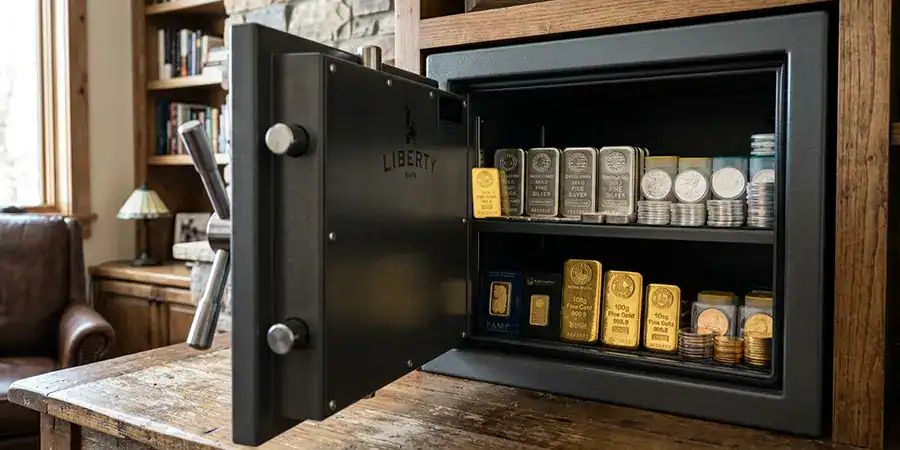
Learn how fire ratings and humidity control work together to protect your gold and silver bullion at home, with practical tips for Southern California homeowners.
Buying a fire-rated safe is only half the battle when storing gold and silver. The very insulation that protects your bullion from extreme heat can trap damaging moisture inside — a real risk across Southern California’s shifting coastal and inland climates.
Let’s examine how to balance fire protection with humidity control to keep your collection intact.
Understanding Fire Ratings for Home Safes
Fire ratings indicate how long a safe can protect its contents during a fire and how hot the interior can get.
- What the rating means: A common standard is UL 72, which includes ratings like “Class 350 1-Hour” or “Class 350 2-Hour.” This means the inside of the safe stays below 350°F for one or two hours, even if the outside is engulfed in flames.
- Why 350°F matters: Paper documents and some coin packaging can scorch or combust at temperatures above this level. It’s the general benchmark fire-safe manufacturers test against.
- What this means for bullion: Gold melts at around 1,948°F and silver at around 1,763°F. A house fire is unlikely to melt your metal. The real risk is damage to:
- Protective packaging and certificates of authenticity
- Coin cases or mint packaging
- The surface finish on proof coins or collectibles
- Wildfire considerations: If you live near brush or hillside areas, a higher fire rating (1-hour minimum, 2-hour if possible) adds peace of mind.
- Always check manufacturer specs: Fire ratings and testing conditions vary by brand. Confirm the exact rating and time duration before you buy.
The Role of Humidity Control in Bullion Storage
Moisture can cause quiet, long-term damage that’s harder to notice until it’s too late.
- Silver is prone to tarnishing: it reacts with moisture and sulfur compounds in the air, causing it to darken over time. This doesn’t reduce the metal content, but it can affect the surface appearance and collector value.
- Gold is more stable: Gold doesn’t corrode or tarnish, but it can still pick up moisture-related residue or damage its protective packaging.
- Fire-resistant safes trap moisture: Many fire-rated safes use insulation designed to release moisture during a fire, helping regulate interior temperature. The downside is that this same insulation can make the inside of the safe more humid during normal, everyday storage.
- Signs of humidity problems:
- Cloudy or foggy coin capsules
- Dark spots or tarnish on silver
- A musty smell when you open the safe
- Coastal vs. inland climates: If you live near the coast, ocean air naturally carries more moisture into your home. Inland and desert areas are drier, but seasonal humidity swings still occur. Either way, don’t assume Southern California’s generally dry climate means your safe is immune to moisture buildup.
Fire Ratings vs. Humidity Control: Key Differences
It helps to think of these as two separate jobs your safe needs to do.
- Different threats, different solutions:
- Fire ratings protect against heat and flame exposure
- Humidity control protects against moisture, tarnish, and corrosion
- Fire protection is passive: Once you buy a fire-rated safe, that protection is built in. You don’t need to maintain it daily.
- Humidity control is active: Unlike fire protection, it requires ongoing attention, such as monitoring humidity levels and replacing desiccants.
- One doesn’t replace the other: A great fire rating says nothing about how dry the inside of your safe stays day-to-day. You need both features working together, not one instead of the other.
- The tradeoff to know: Many fire-resistant safes aren’t naturally good at controlling humidity, since their insulation is designed to manage heat, not moisture. That means you’ll likely need to add your own humidity solution regardless of the safe’s fire rating.
Best Practices for Storing Gold & Silver Bullion
Here’s how to protect your bullion from both fire and humidity damage.
- Use a hygrometer: This small device measures humidity levels inside your safe. Aim for consistent, low humidity and check the manufacturer’s guidelines for your specific metals and packaging.
- Add desiccants or dehumidifier rods:
- Silica gel packs absorb moisture and are affordable and easy to replace
- Rechargeable dehumidifier rods plug in and actively pull moisture from the air, which works well for larger safes
- Avoid original mint packaging in humid conditions: Cardboard flips and paper sleeves can trap moisture against your coins. Consider inert, archival-quality capsules or tubes instead.
- Handle with cotton gloves: Skin oils and sweat can accelerate tarnish on silver. Gloves also help preserve the surface quality of gold coins and bars.
- Keep your safe anchored: This is a security step, not a humidity or fire tip, but it’s worth mentioning. Bolt your safe to the floor or wall studs to prevent theft, especially if you’re storing valuable bullion.
- Document everything: Keep an inventory list with photos, purchase receipts, and appraisals. Store a copy outside the safe (with a trusted family member, in a safe deposit box, or digitally) in case you ever need it for insurance purposes.
- Check your safe periodically: Even with desiccants and dehumidifier rods in place, open your safe every few months to inspect for tarnish, moisture, or damage to packaging.
Choosing the Right Safe for Precious Metals
When shopping for a safe, look beyond the fire rating alone.
- Look for a documented fire rating: Confirm the UL rating, time duration, and maximum interior temperature directly from the manufacturer.
- Check interior humidity performance: Some safes include humidity-resistant liners or additional sealing. Ask the manufacturer directly if this isn’t listed in the product specs.
- Size it for your collection, plus room to grow: A cramped safe makes it harder to organize bullion, desiccants, and documentation. Leave extra space for future additions.
- Consider a dedicated gun or jewelry safe: these often have better built-in humidity-control features than basic fire-rated document safes.
- Factor in placement: Keep your safe in a climate-controlled area of your home, like a closet or interior room, rather than a garage or attic where temperature and humidity swings are more extreme.
- Budget for accessories: A hygrometer and dehumidifier rod are inexpensive additions that make a big difference in protecting your investment long-term.
Protecting your gold and silver bullion doesn’t have to be complicated. Once you understand that fire rating and humidity control solve two different problems, you can set up your safe with confidence. Start with a safe that has a solid fire rating, then add moisture-control tools suited to your home’s climate. A small amount of upkeep now helps preserve your bullion’s condition and value for years to come.
FAQs: Storing Gold & Silver in a Safe
Q: Can a fire melt gold or silver bullion?
It’s highly unlikely. Gold melts at approximately 1,948°F and silver at approximately 1,763°F, temperatures that most residential house fires don’t reach. The bigger risk to your bullion is damage to packaging, cases, or coin surfaces.
Q: Do I need a dehumidifier even if I live in a dry climate?
Yes. Even in generally dry parts of Southern California, humidity levels can fluctuate seasonally, and fire-resistant safe insulation can trap moisture inside the safe regardless of outdoor conditions.
Q: What’s the difference between silica gel packets and dehumidifier rods?
Silica gel packets passively absorb moisture and need periodic replacement or recharging. Dehumidifier rods plug into an outlet and actively reduce humidity, which can be more effective for larger safes or long-term storage.
Q: How often should I check my safe for humidity or tarnish issues?
A quick inspection every few months is a good habit. Look for cloudy coin capsules, dark spots on silver, or a musty smell, which are all signs that humidity levels need attention.
Q: Should I store bullion in its original mint packaging?
It depends on your climate and storage conditions. In humid environments, original cardboard or paper packaging can trap moisture against the metal. Inert capsules or tubes are generally a safer long-term option.
Q: What fire rating should I look for in a home safe for bullion?
A minimum 1-hour rating is a reasonable starting point for most homes, while a 2-hour rating offers extra protection, particularly if you live in a wildfire-prone area. Always confirm the exact rating and test conditions with the manufacturer.
Q: Does gold need the same humidity protection as silver?
Gold doesn’t corrode or tarnish as silver does, but it can still benefit from humidity control to protect packaging, certificates, and surface finish, especially on collectible or proof coins.
Q: Where’s the best place in my home to put a safe for bullion storage?
Choose a climate-controlled interior space, like a closet or dedicated room, rather than a garage or attic. These areas experience more extreme temperature and humidity swings that can affect both fire performance and moisture levels.